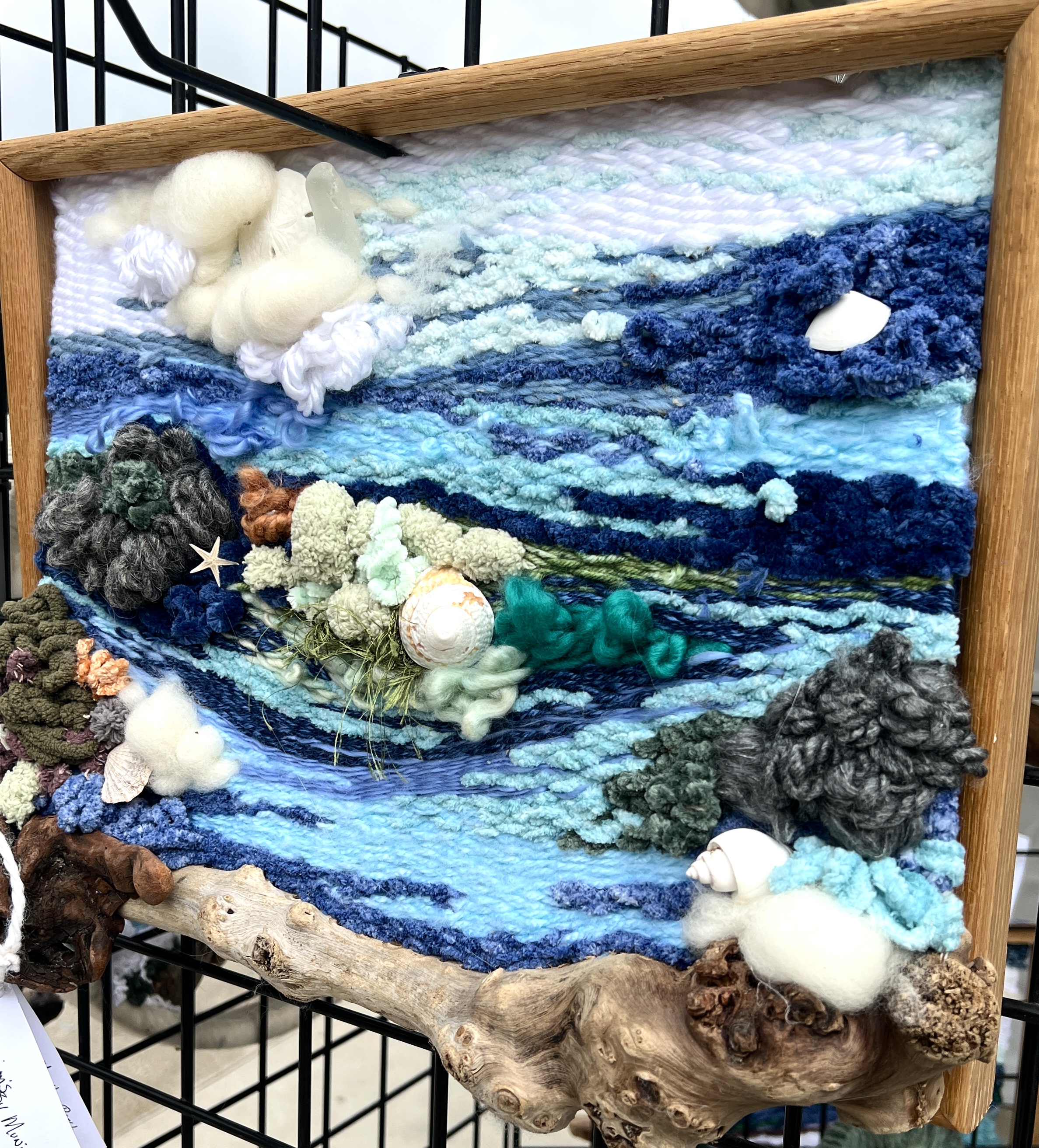
A “painting” in textile, wood, and synthetic fibers
The wood base may be driftwood, a branch, a bamboo root.
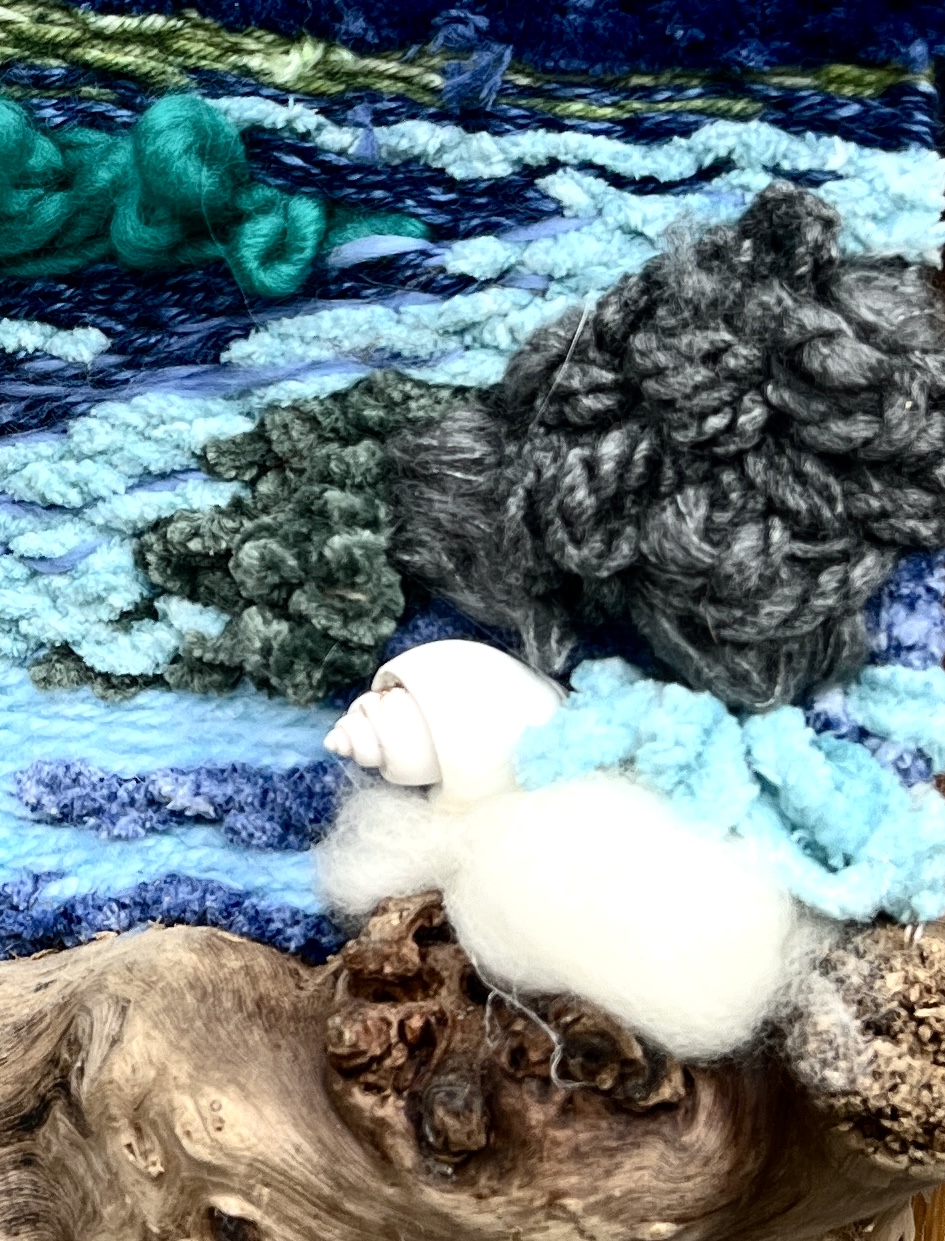
The blue layer is a mix of textures, intensifying from coarse to fine, dark to light. The white layer transitions from foam to cloud, a tumble of wool, silk, other fibers.
Most of the dozen or so works I saw at the Expressions by Munir booth had this 3-tier structure, defining a particular point of focus — the crashing, soaking, roiling intersection of earth, sea, and sky. The closer you look, the more complicated it becomes. See close-ups below.
See Munir’s work on Instagram: @expressionsbymunirunir
Rule of thumb: When considering a “language of origin” pronunciation, recall how you pronounce the capitals of France, Germany, and Italy in normal conversation. Do you say Pah-REE? Bare-LEEN? R-r-r-ROAM-mah?
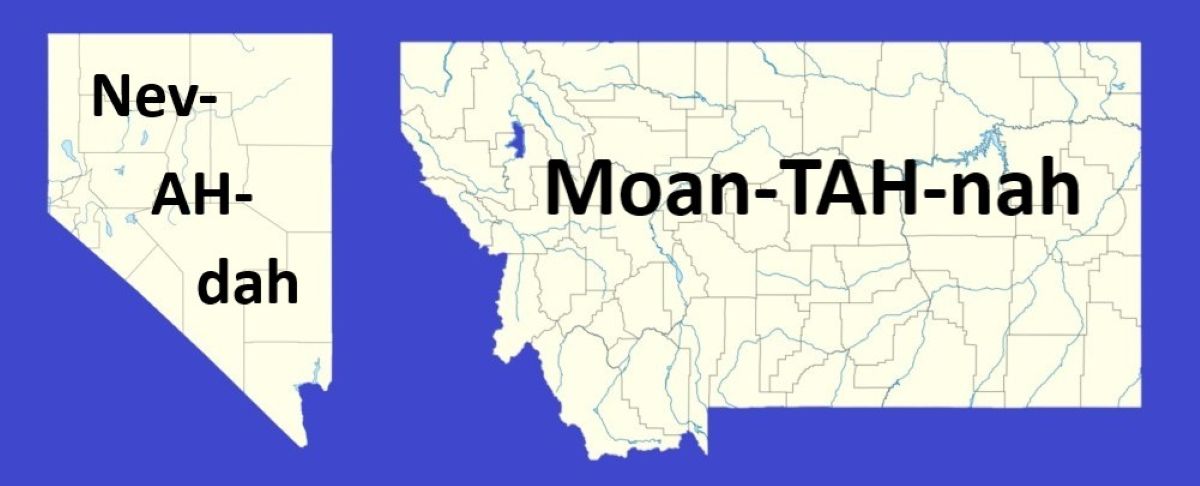
So don’t be an ass (ahss) about Nevada.
And for heaven’s sake don’t say Nev-AH-dah in the same sentence with AIR-uh-ZONE-uh. Duh.
Tourist — not TORE-ist
It does not rhyme with “florist.” Consult the pronunciation of “tour” — which you know perfectly well from “three-hour tour” in the Gilligan’s Island song.
Meteorologist — not someone who studies meters
Meteor, with three syllables, is from ancient Greek — “in or from the sky.” The meaning idepends on the third syllable. Say what you mean.
Mail — not MELL
No one mispronounces “snail mail.” And yet:
shoot me an emell
with juicy detells
about the yard sell
Vowel Shift Alert: Long a is slumping into short e.
Short i may be headed the same way.
glass of melk
Jack and Jell up the hell
her and hem
Auntie — hmmm, could go either way
Aunt and jaunt ought to rhyme. For many Americans they do rhyme. Yet “ant” has been the majority US pronunciation since the 1920s at least.
Probably the “ants” came marching in during westward settlement in the early 1800s. West of the Appalachians, you mostly hear “ant.”.
Best advice: When in Rome . . .
Entrepreneur— not ontra-pren-NEWER
Rhymes with “burr,” not with horse droppings. Show the business builder a little respect.
Truth is the structure of things under the tablecloth of perception.
• We may not see truth itself, but we can come to an understanding of it — by patient observation. The five blind men have it in them to describe an elephant accurately (though not completely).
Beauty is delight in the way a daisy is organized, or disorganized.
• Beauty is important — despite being 100% subjective — because it is a universal experience. • Beauty affirms: life is not only worth living (about me), it is worth witnessing (a whole world out there).
• At age 7 or so, children begin to understand their parents are not 100% reliable. Friends help us gain confidence in our own experience and judgment. They also show us that the lives and feelings of others are real. • Knowing that pain and happiness in others are real gives us an ethical basis for choices we will make as parents, citizens, and office-holders and as human beings.
Citizenship is duty you owe your community, for making your way of life possible.
• Every first-grader understands “no fair.” Justice is the first abstract principle we human beings grasp — and our first step toward philosophy. • Socrates drank hemlock, accepting the verdict of a lawful jury. His reasoning was: he received the benefits of being an Athenian citizen — security, freedoms, access to knowledge, a downtown market overflowing with goods from around the world, a life of possibilities only a civilized country could offer. It was fair to expect in return that he would submit to Athenian laws. • When we see injustice in our laws, we have a duty to speak up and take action — and face the legal consequences openly, as Martin Luther King did. Laws get their authority from public confidence that justice will be served.
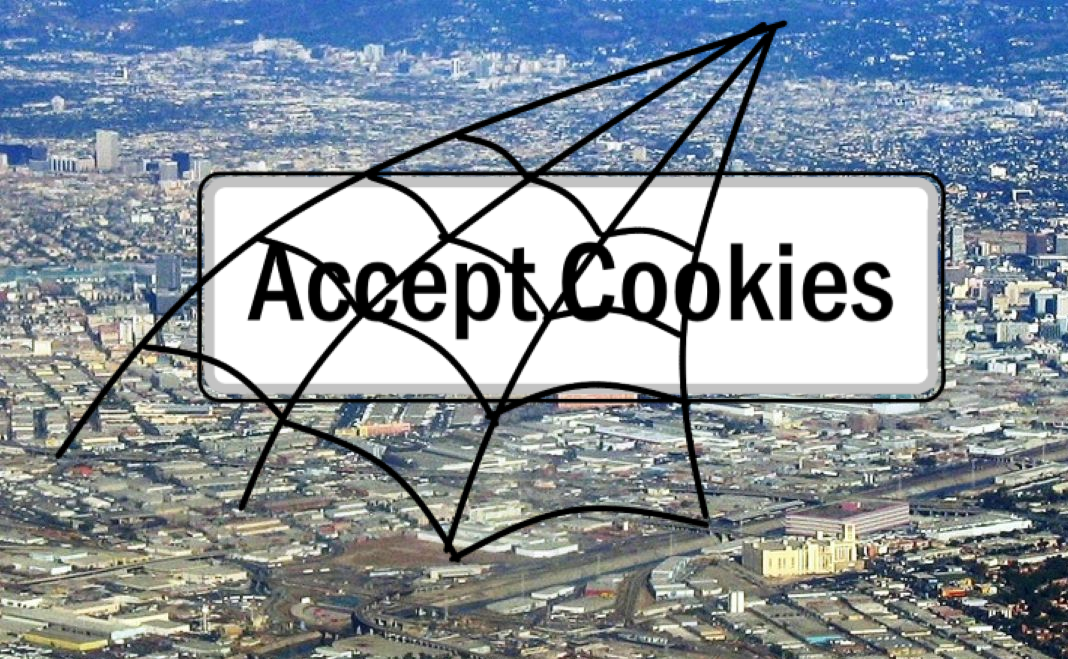
Aerial view of Los Angeles (River) by flickr user 4067 via Wikimedia.
How will Consumers live in a jobless economy?
Short answer: Sellers cannot continue to exist without buyers. Corporations will invest in the acquisition of buyers, recognizing that:
* * * Consumers provide valuable services before they buy. * * *
Most of these services are unpaid today. That will change.
Your Piece of the Marketing Pie
Online today, you click Accept Cookies. Tomorrow you will click Get Paid for marketing data.
In the AI future, when a marketing representative sets up in the grocery store to offer you samples of lemon-flavored water or mini-wieners wrapped in bacon, YOU will aim your phone to activate BILLABLE ATTENTION TO MARKETING MINUTES (BAMM!).
Your BAMM! will notice and record every billboard, every commercial on the radio, and every square inch of commercial signage as you drive by. Every noodle-balloon dancing outside the car wash, the falafel stand, the tax-preparation service — all will be billable.
Noticing, choosing, giving feedback about your customer experience… It’s all data, worth money. In the AI economy, you will become a supplier, a vendor, a valued business partner to businesses selling things to you.
Today a Consumer, tomorrow a consultant.
Not All Jobs Will Disappear
No doubt there will be a universal basic income with Medicare for all and various educational and other benefits, like free smartphones, free gaming, and payouts from class-action lawsuits against Meta, X, and their ilk.
The AI economy will provide just about everyone with almost enough income to live frugally in one of the outer suburbs. (Anything more would be Socialism.)
Skilled Specialists will continue to work and get paid in fields such as:
• Violin repair • Legacy plumbing analysis and work-arounds • Seeing the elephant in the room • Making up jokes that are really funny • Mothering infants and young children
Most of us will continue as Consumers, pursuing happiness in the same way as others who don’t have to show up for work every day — like the Real Housewives of New Jersey.
In the big picture, our real job in life is to forward DNA to the future. The future looks bleak right now, as it always does to the older generation. Fortunately or not, we don’t have much say in what uses our DNA will be put to. Do you think Queen Victoria would have borne four princes and five princesses if she could have foreseen the Roaring Twenties? Or a knighthood for Mick Jagger?
From the incalculably many lives in the future, there will come a few — a Gutenberg, a Luther, a Thomas Jefferson, a Susan B. Anthony, a Martin Luther King Jr. — to continue the unveiling of the potential in our humanity.
• Some letters are wide (w, m). • Some are narrow (l, i). • Some have buggy whips (f, r).
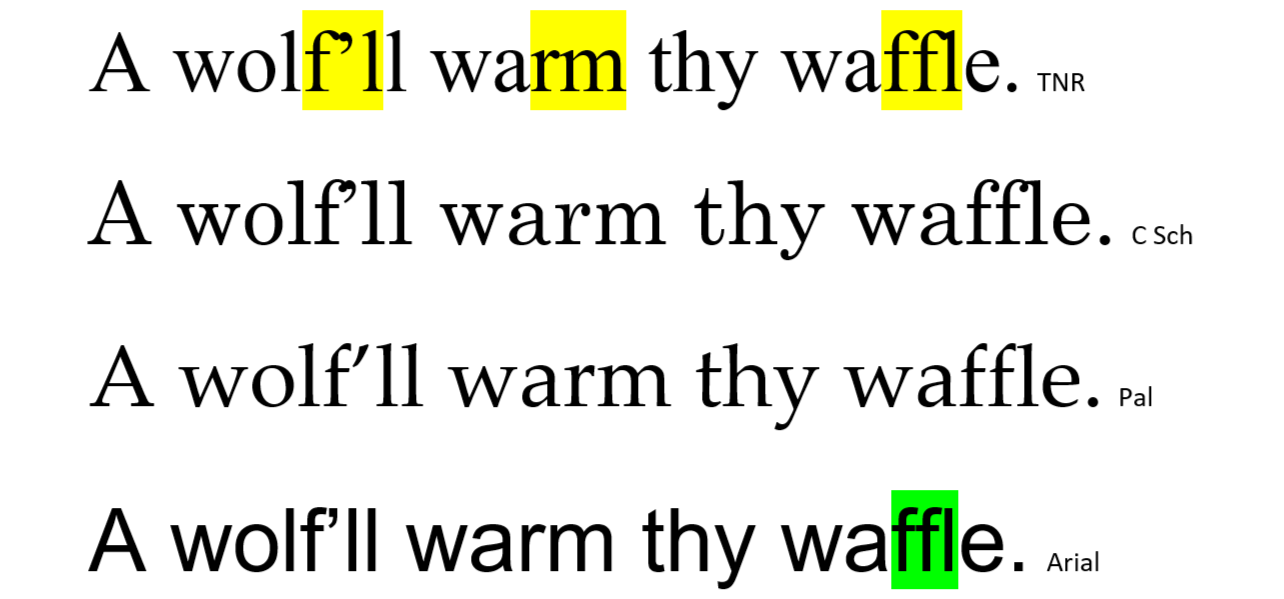
Letterspacing within words can get touchy, as when f lashes out at l. An r crowding an n may look like an m. An apostrophe after f looks like a sneeze in search of a kleenex.
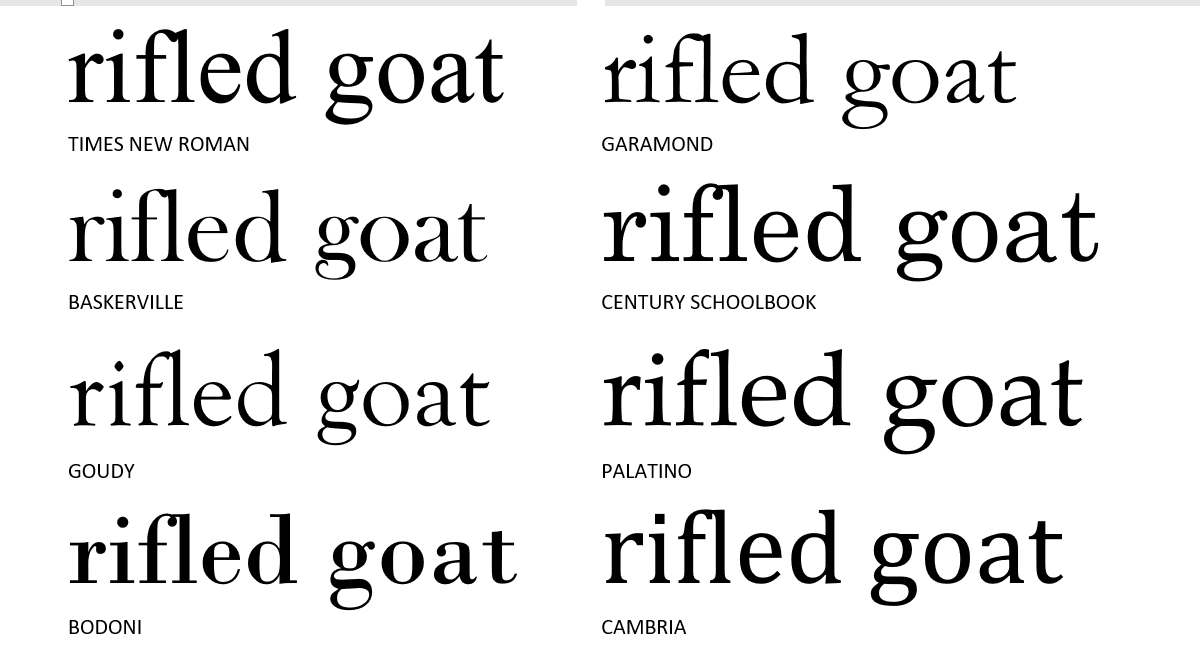
See examples below. Times New Roman is a tightly bunched font. Century Schoolbook is wider and spacier but still has encroachment issues. In “wolf’ll,” the apostrophe is shamelessly snogging the f.
Palatino is clean and modest by comparison.
Arial and other clean-cut fonts are less prone to touchy overcrowding, partly because their letter strokes do without terminal blobs and beaks (serifs). Taking a close look at “waffle,” you see how pleased with itself Arial must be, not only keeping the f-crooks clear of each other but also joining the horizontals to form a double letter (ligature). That’s tight spacing.
Apostrophes in Close-up
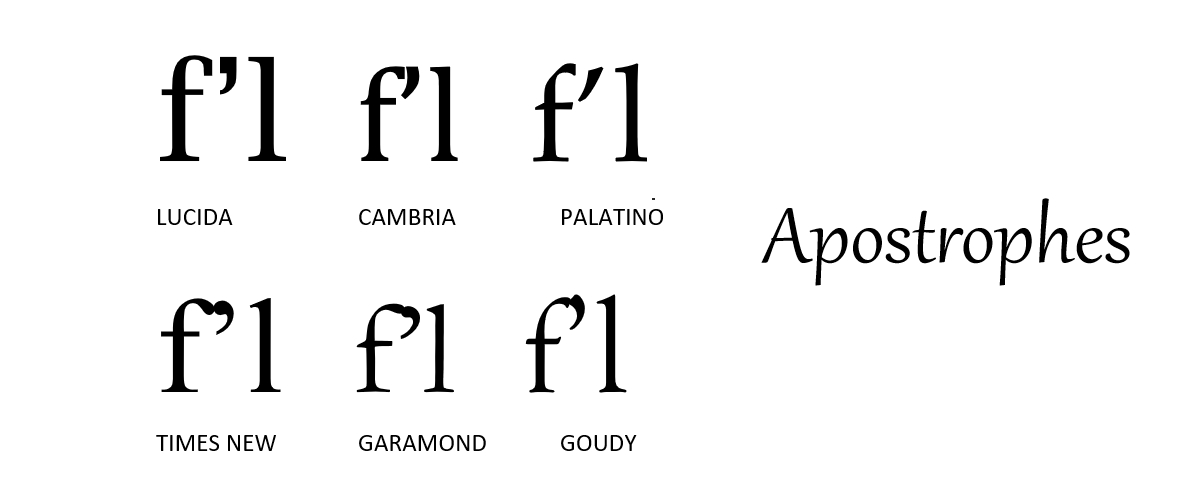
Below are f-apostrophe examples in serif fonts (blobs, beaks, and pedestals).
Lucida has its square-head apostrophe centered perfectly, as you would expect in a font from the bit-mapped 1980s. Palatino solves spacing by redesigning the apostrophe, from a yin shape to a semi-bananoid.
Under the f-Blob
The f-blobs in Lucida and Cambria are like kitchen faucets aiming downward. The Cambria r is going to get wet. Square dots over the i’s date these as pixel-era fonts.
Palatino and Goudy scream hand-lettered.
Palatino’s f rises thick, angles thin, then thickens again to a squared-off, forward-looking stop: thinning or thickening at turns is characteristic of a pen with an angled nib (chisel-tip).
In the Goudy f, the thinning is more fluid, suggesting a brush stroke. You can always identify Goudy by the letter i, dotted with a diamond.
The f in Times New Roman droops nearly on top of the r . That is TIGHT letter-spacing, valued highly in narrow-columned newspapers but less so in books.
Baskerville is a grandfather of TNR. Both have heavy blobs, which may improve readability by making thin strokes more visible. Thin strokes are much thinner in Baskerville.
Topknots and g-Bags
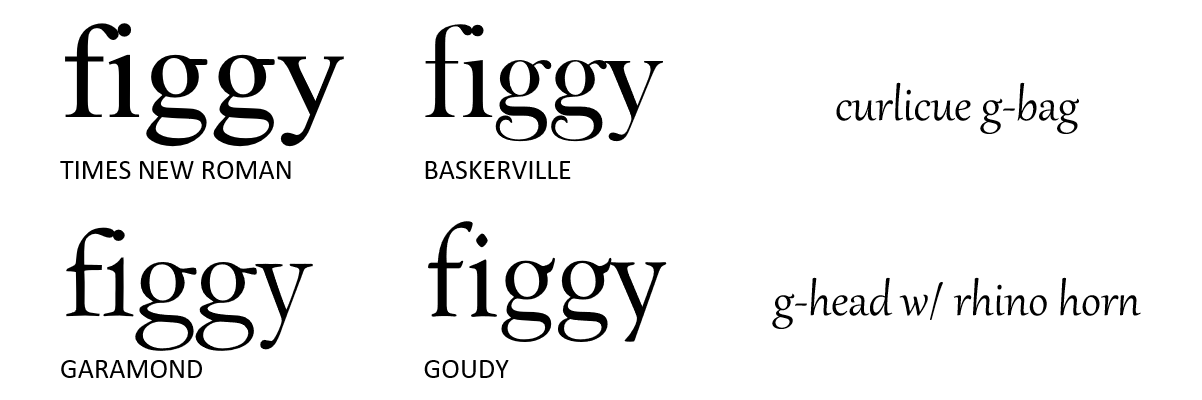
The letters g and y are “below the baseline” cousins to f and r, encroaching on neighbors’ space. Why does y slant backward? Why does this kind of g have a lasso below? Short answer: these are the forms inherited from medieval manuscript tradition. The first fonts were designed for readers who were accustomed to monkish handwriting.
The Baskerville g features a curlicued oval, which is not quite closed. The serif on its g-head is like the topknot on a quail, bowing courteously.
Both Garamond and TNR set their serifs low enough on the g-head, like the bill of a ballcap, to avoid the y-serif. Goudy’s rhino-like g-serif damn-near stabs the y.
The Un-round O
The letter o is seldom a circle. It may be a perfect circle in typewriter-born Courier, but it’s an obvious oval in Arial — a font so standardized every stroke of every letter is of uniform thickness. It is surprising then to find one of the TNR-like fonts (Gar, C Sch, Bodoni) has a circular o. Hint: the one with the droopiest a-bag.
Notice the white pill shape inside the o in C Sch and Bodoni. The pills are upright. Notice how the pill in TNR is tilted slightly leftward. Is it because monks were mostly right-handed? Notice also in TNR that d and b, which ought to be mirror images, are not. Though TNR’s middle name is New, there’s much of the Middle Ages still in it.
Read On
You’d never finish a book if you noticed irregularities in every letter of every word. So we surf lines of type without regard to the droplets flying in every wave. No doubt the future of fonts — and language generally — will bring further simplification and modularity. Yet the smoothest surface, under magnification, always turns out to be a jungle gym of atoms, with long molecules swirling in a vortex of association and connection, toward the eye of madness — or further study and enjoyment. To that end, here is an array of examples for contemplation at your leisure.
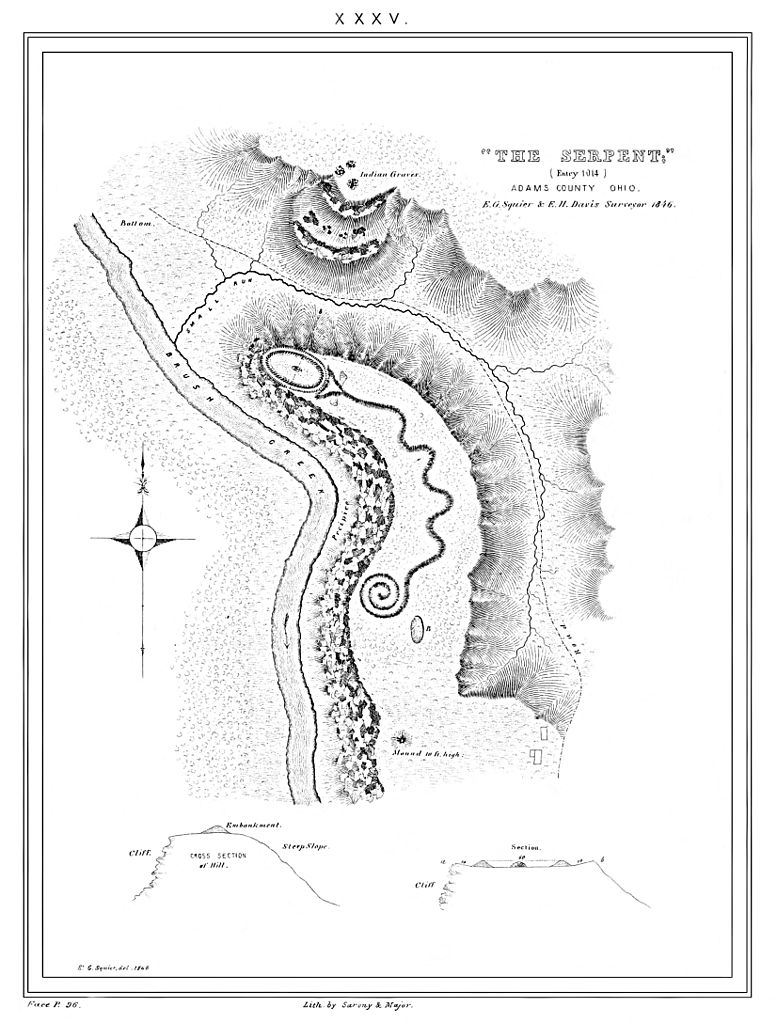
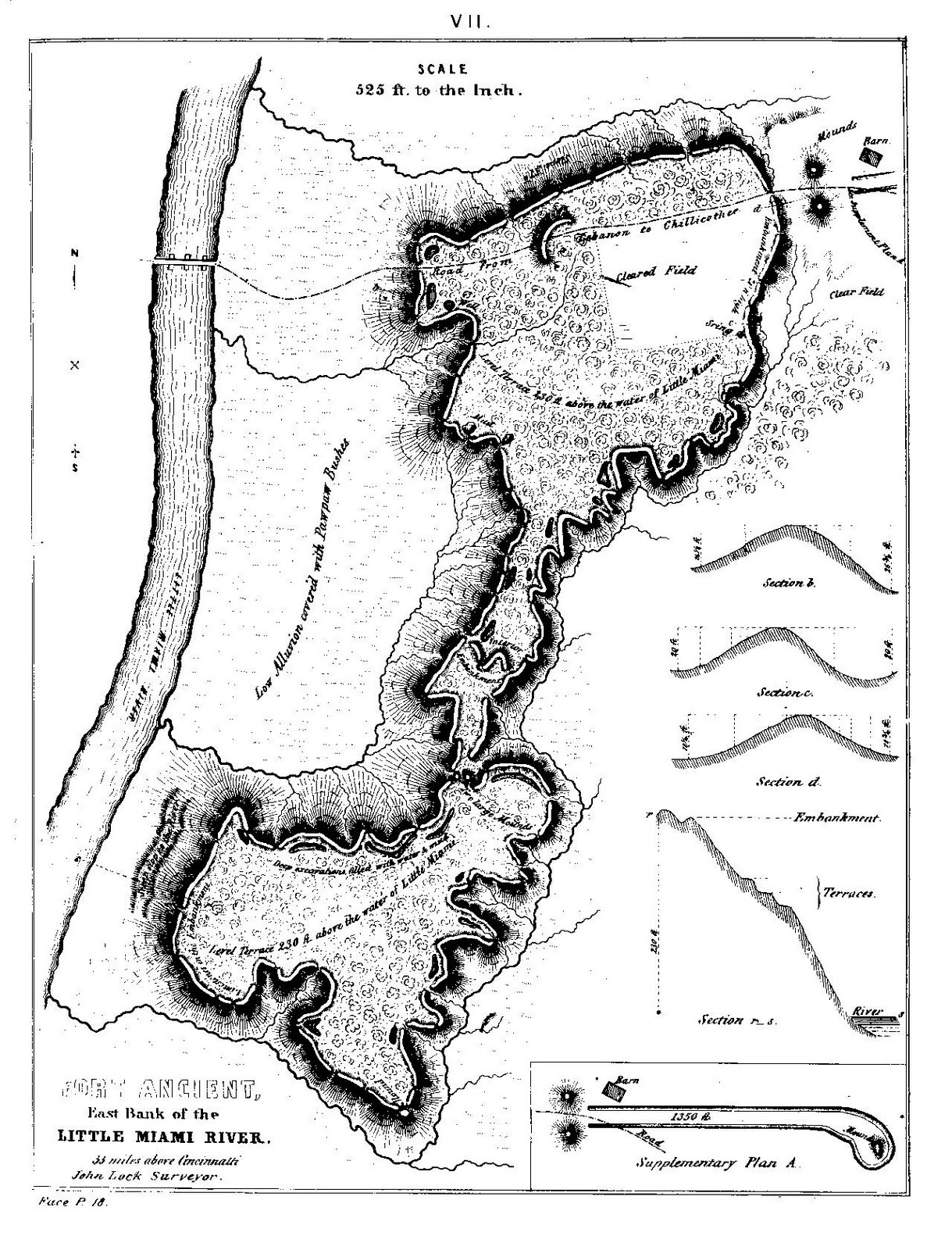
From Squier and Davis, Ancient Monuments of the Mississippi Valley (1848)
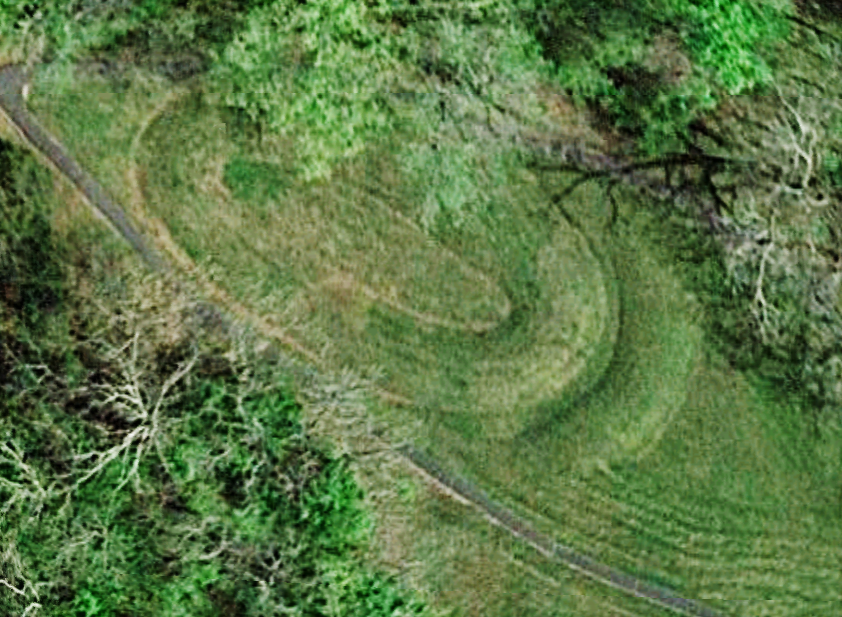
At top, the yoke is between the two paths. Photo: Jarrod Burks, via drone camera
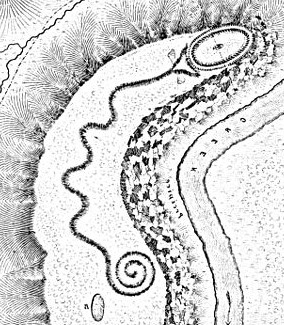
The yoke is at bottom right. A berm forms the oval head, in the middle of which is a capsule-shaped mound a few feet high.
Assuming the Great Serpent is a reflection of a figure in the sky, we look for a serpent-like arrangement of stars with its head pointing westward — i.e., a reversed image of the Squier and Davis drawing.
Winter constellations visible from Ohio.
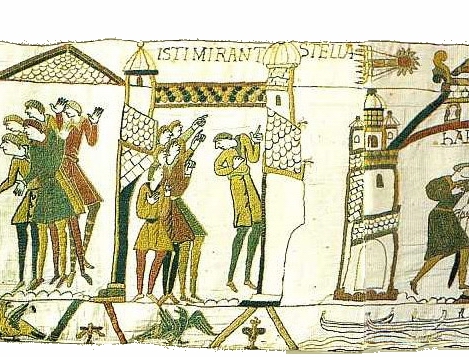
The head is centered on the 3.5 magnitude star Wasat, a spectacular sight in 1066 when occulted by Halley’s comet. A necklace of faint stars forms the yoke. The coil of the tail, including a few stars from Canis Major, ends on the brightest star in Puppis (Naos).
The hourglass shape of Orion has a rough counterpart in the Fort Ancient earthwork, not far from Cincinnati.
The Bayeux tapestry (scene 32) shows amazed observers pointing at Halley’s comet above a tower. In the night skies of January–March 1066, the spraying “star” passed through the middle of the oval head at Gemini.











 Karl Stull - Creative


